September 18, 2026 – Home Owners, Propane Answers
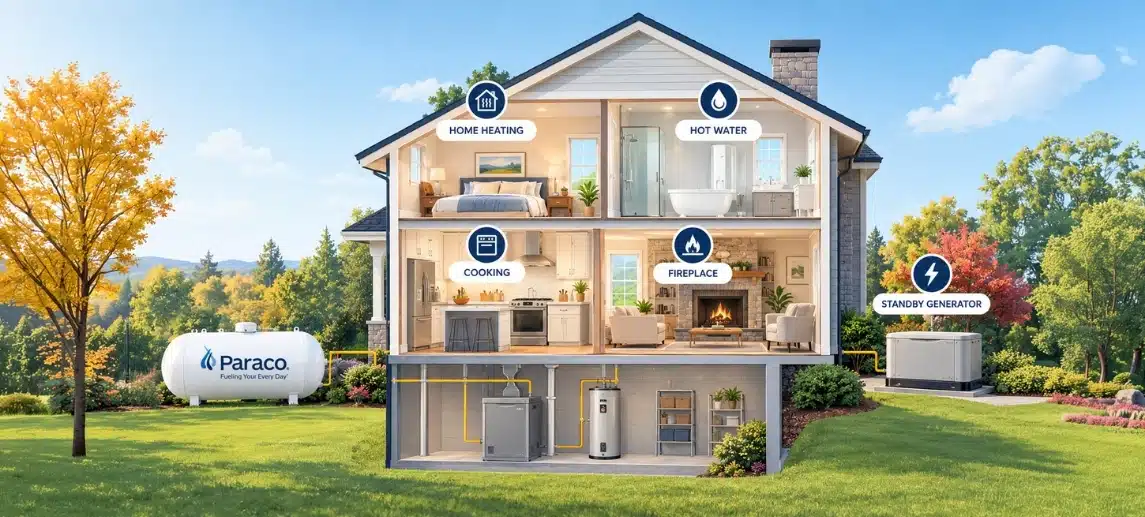
Homeowners switch from oil to propane for everyday benefits: steadier heat, a cleaner burn without the fuel odor in the basement, one fuel source for the furnace, water heater, range, fireplace and standby generator. Plus, that aging oil tank is finally out of the picture.
If your home still uses heating oil, you may eventually start wondering if it’s time for a change. The system is getting older, your oil tank needs replacing, or you’ve heard about neighbors switching to propane. This guide walks through what changes when you switch, what the conversion involves, and how to decide if propane is right for your home.
Should you switch from oil to propane?
For many Northeast homes with an aging oil system, switching to propane can make sense. While savings can vary, the long-term benefits are comfort and simplicity. Propane provides consistent heat, burns cleanly, and can power many other appliances throughout the home.
Oil and propane prices change throughout the heating season, so it’s difficult to base a long-term decision on today’s prices alone. What doesn’t change are the everyday realities of your heating system: aging equipment, fuel odors, and the number of different systems you have to maintain in your home.
The decision really comes down to the condition of your current system. If your oil heating system or tank is getting older and may need to be replaced soon, it’s a good time to consider switching to propane. If you recently installed a new oil system and it’s working well, there may be no immediate need to make a change.
What actually changes in the house
After switching to propane, homeowners often notice four key differences: more consistent heat, no fuel odor in the utility room, the convenience of using one fuel for heating and other appliances throughout the home, and no more aging oil tank to worry about.
Cleaner operation. Propane burns cleaner than heating oil, which means less soot around your heating equipment and chimney, and no lingering oil smell in the utility room. Cleaner combustion can also mean less buildup in the system and less maintenance over time.
One fuel for the whole home. Propane can do more than heat your home. The same fuel can power your furnace or boiler, water heater, range, clothes dryer, fireplace, pool heater, and standby generator, all from one propane supply. That can mean fewer energy sources, fewer bills, and less to keep track of.
No more aging oil tank. An aging oil tank, whether it sits in the basement or underground, becomes another maintenance concern as it gets older and can become more difficult to insure. Removing it is one of the most common reasons homeowners give for making the switch, and often one of the things they’re happiest about afterward.
Supply you can plan around. A propane tank on your property stores fuel until you need it, so the propane delivered during milder weather is ready when colder temperatures arrive. With residential propane service, deliveries get scheduled based on your home’s usage and the weather, so you don’t have to remember to check the tank gauge yourself.
What a conversion involves
A conversion involves installing a propane tank on your property, running gas lines, replacing your oil heating equipment with propane-compatible equipment, and removing or properly decommissioning the old oil tank.
The tank comes first. Aboveground tanks are the most common and typically the simplest to install. If you prefer to keep the tank out of sight, an underground tank can be installed instead. The right tank size depends on your home’s propane usage and how many appliances will run on propane. Our tank sizing and installation page explains the most common sizes and what each one typically supports.
Then comes the piping. Propane requires gas lines to run from the tank to your home. The difference is that, unlike natural gas, propane doesn’t require a gas line coming in from the street. Your fuel supply is stored right on your property, making propane an option for homes where natural gas service isn’t available.
Then the equipment. Because oil and propane burn differently, your furnace or boiler and water heater will need to be replaced with propane-rated equipment. This is also a good time to consider what other appliances you may want to run on propane while the conversion work is already underway.
Finally, the old tank. The oil tank is removed or properly decommissioned by a licensed professional. If the tank is underground, it’s especially important to have the work done properly and documented, as a future buyer or insurance company may ask for those records.
A straightforward conversion can usually be completed within a few days once the necessary permits are in place. The timeline will depend on the scope of the work and the scheduling for the installation.
Efficiency and what it means for your house
Modern propane heating equipment turns more of the fuel you use into heat for your home, while propane produces less carbon dioxide than heating oil for the same amount of energy. These are two of the main reasons propane is considered a cleaner, more efficient option; especially when replacing an older heating system.
In practice, the benefits depends on what you’re installing and what you are replacing. Replacing a 20-year-old oil system with a high-efficiency propane furnace or boiler can make a much bigger difference than replacing a newer system. Ask for the efficiency rating of the propane equipment you’re considering and compare it with the system you have today.
The numbers, simply put: A BTU is simply a unit of heat energy. According to the U.S. Energy Information Administration (EIA), one gallon of propane contains about 91,452 BTUs. EIA’s 2024 data also shows that propane produces less carbon dioxide than heating oil; about 138.63 pounds per million BTUs, compared with 163.45 pounds for heating oil. And to earn the ENERGY STAR label in the northern U.S. a gas furnace must have an efficiency rating of at least 97% AFUE or better, meaning 97 percent of the fuel becomes usable heat.
There’s another benefit to consider. Having a newer heating system and no buried oil tank can mean one less concern if you ever think to sell your home; and one less potential issue during an inspection.
For a closer look at what propane can offer your home, visit our benefits of converting to propane.
Frequently asked questions
What is involved in converting from oil to propane?
A propane tank is installed on your property and sized for your home’s needs. Gas lines are then run from the tank to your home. Your oil furnace or boiler and water heater are replaced with propane-compatible equipment, and the old oil tank is removed or properly decommissioned.
Is propane cleaner than heating oil?
Propane burns cleaner than heating oil, which means less soot and no fuel odor. According to the U.S. Energy Information Administration, propane produces about 138.63 pounds of carbon dioxide per million BTU compared with 163.45 for distillate fuel oil, the category that covers home heating oil.
How long does an oil to propane conversion take?
A straightforward conversion can usually be completed within a few days once permits are in place. This includes installing the propane tank and gas lines, replacing the heating equipment, and removing the old oil tank. The exact timeline depends on the scope of the project and scheduling, so ask for an estimated timeline when you get your quote.
What happens to the old oil tank?
The old oil tank is removed or properly decommissioned by a licensed professional. If the tank is buried, be sure to keep the paperwork, as a future buyer, home inspector, or insurance company may ask for documentation.
Can I keep my existing oil furnace and run it on propane?
No. Oil and propane burn differently, so your heating equipment needs to be designed for propane. Depending on the equipment, it may need to be replaced or properly converted if the manufacturer allows it. Your propane provider can recommend the right equipment and size for your home when planning the switch.
Thinking about making the switch
Converting from oil to propane is about more than changing fuels; it’s about your home. It can mean more consistent heat, no lingering oil smell in the utility room, the convenience of using one fuel for multiple needs, and no more aging oil tank to worry about. If that sounds like your house, explore the benefits of converting to propane, then talk to your local Paraco team about what a conversion could look like for your property.